Discover the strategic lessons from the Israel-Iran conflict. Learn why India must move beyond foreign imports and pivot to AI, cyber, and true technological sovereignty.
 Prof. (Dr.) Nishakant Ojha
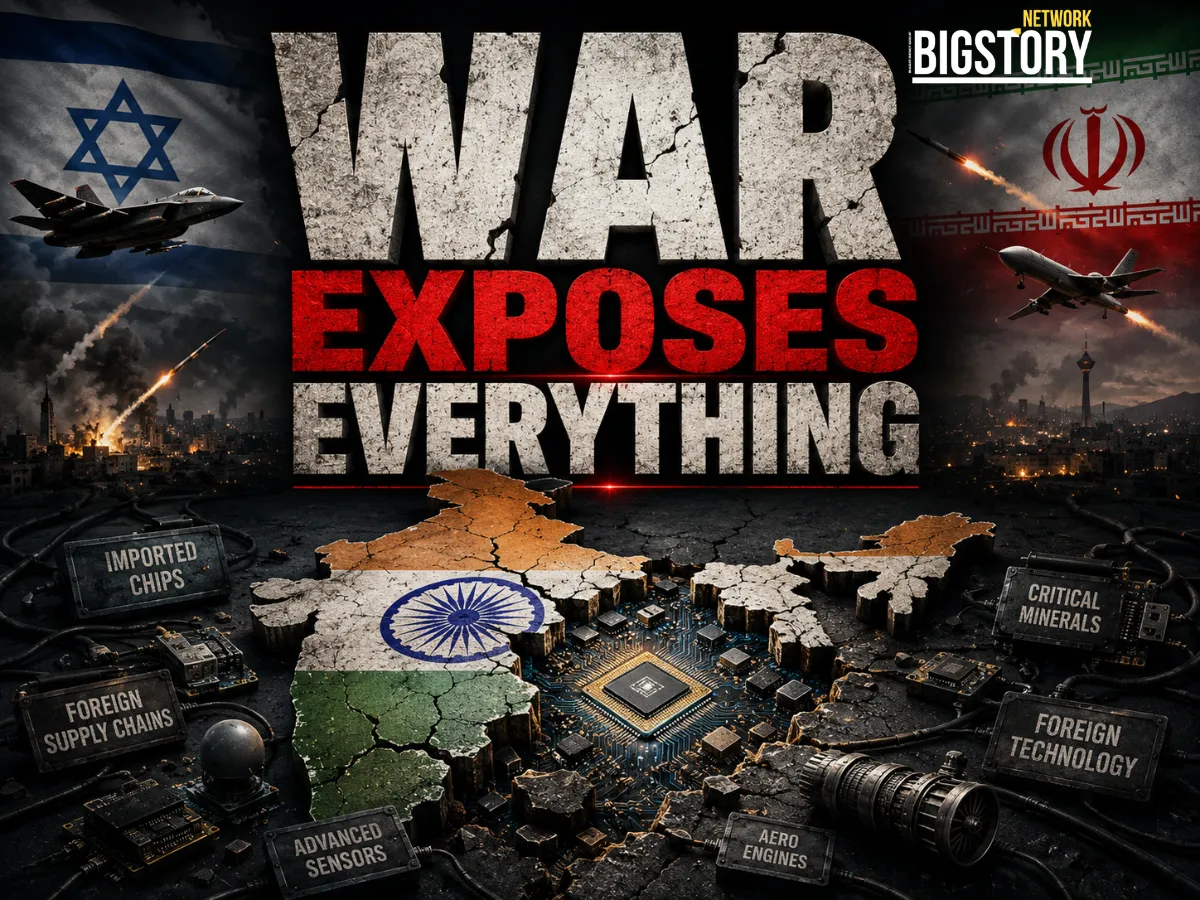
The Reality of Modern War: The Israel-Iran conflict proves that conventional military dominance is no longer enough. Modern conflicts are wars of endurance, utilizing hybrid tactics across cyber, financial, media, and logistical battlegrounds.
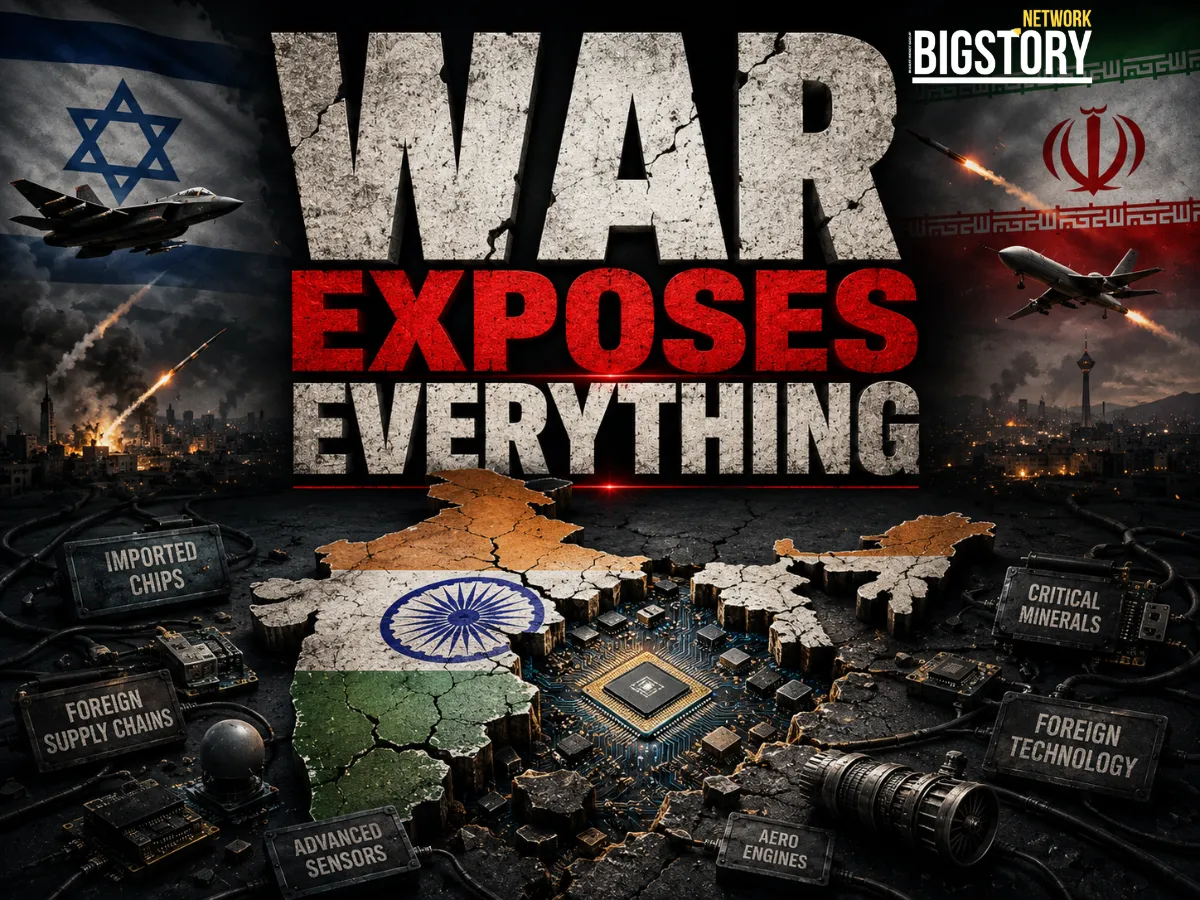
The "Illusion of Independence": Despite massive modernization, India’s military remains dangerously reliant on foreign imports and overseas supply chains for critical components like aero-engines and semiconductors. Assembling foreign tech locally is not true innovation.
The Technological Pivot: Traditional platforms like tanks and artillery are losing strategic relevance. The future of warfare will be dictated by emergent technologies: AI, quantum computing, autonomous systems, and cognitive warfighting tools.
The Solution: India must abandon purely academic, theoretical defense policies. True national security requires integrating the state, military, academia, and startups to build genuine technological sovereignty and unbreakable national resilience.
Reality in warfare is unique in that it reveals what has been suppressed during peacetime. War places a distinction between a man's awareness of something and his ability to actually perform that thing, a country's claim about its preparation for something versus its real preparation for it, and a man's intent about what to do versus what he will actually do. Of all the contemporary geopolitical conflicts happening today, the ongoing one between Israel and Iran stands out as a major power struggle, while most of the world has been paying attention to the rocket exchanges, drone attacks, anti-air operations, and military responses to attacks, there is another area where this conflict is truly momentous, and it is the larger context in which both states have been locked in battle. That is the power vs. Endurance contest, technology vs. Resiliency fight, and traditional military doctrines of both countries versus the developing context of hybrid warfare.
In addition to providing significant lessons to potential superpowers such as India, the current Israel-Iran conflict provides strategic lessons for the rest of the world as well. As such, policymakers, military planners, leaders in technology, and strategic thinkers throughout the globe will need to address a host of difficult questions related to self-reliance, preparation for war, technological sovereignty, and the future of warfare itself.
Initially, the indicators were that Israel would have considerable advantages in military capabilities. Israel maintains one of the most technologically advanced militaries in the world, built on a foundation of sophisticated intelligence networks, integrated air defense systems, precision-strike capabilities, cyber warfare capabilities and decades of operational experience. On the battlefield, Israel has shown the capability to penetrate enemy networks, successfully hit strategically significant targets, and to impose significant costs on adversaries.
In spite of the achievements made by the state of Israel, it continues to face difficult political decisions. Tactical success does not guarantee the same kind of success politically in the same way. The fact that Israel has superior military capabilities does not ensure Israel will achieve victory strategically without difficulty. The conflict between the state of Israel and the state of Palestine has devolved into an extended battle where endurance, flexibility and the ability to endure politically are equally important as success on the battlefield.
The answer lies in the nature of Israel's adversary;Iran. Ever since the Islamic revolution in Iran over four decades ago, the state of Iran has been building its capacity to specifically react to an attack on Iran by an adversary who possesses superior conventional military power.Iran has thus developed through the IRGC a wide network of missiles, drones, cyber capabilities, proxy networks, regional ties and resources to fuel its economy, as well as instruments to execute warfare information.
Iran's design was simple: Ensure that the adversary would not achieve a quick conventional military victory; essential.
Modern warfare is less dependent on who draws the first bullet, rather more on who can sustain a sustained war, recover from tactical failures and shock, incorporate changes swiftly without losing political cohesion and ultimately gain victory. From Israel's perspective the recent escalation between it and Iran demonstrates how today's warfare battlegrounds are no longer constrained to conventional warfare locations but rather the entire Internet, financial systems, media, diplomacy, logistical systems and public opinion have been declared new battlegrounds.
In essence, this is the age of the hybrid warfare.
Hybrid warfare combines conventional tactics (like air power, land forces etc) and non-conventional warfare (like cyber warfare) to achieve a goal which may be best described as political. Unlike conventional warfare, the goal is not necessarily to capture land; rather to create decision-making confusion, increase costs, lower confidence, and reduce an adversary's capability to achieve the desired objectives.
This principle of war has repeated itself through history numerous times. Iraq and Afghanistan for example, proved that in spite of decisive military victories, there was no successful political victory. The Soviets too faced problems in Afghanistan and similar results were seen in the Israel-Hezbollah war in 2006 as conventional technologically superior militaries failed to defeat an adversary employing hybrid warfare techniques.
While military power is necessary, it is not enough.
India's national security implication is huge since independence. India has struggled hard to be recognized and we have gained a lot over the years since our independence. We have a credible nuclear deterrent, multiple missile systems, a budding space capability and better digital infrastructure, besides one of the world's strongest militaries. Most important, India has increased its importance in global politics to a great extent.
Along with all these benefits, one more truth which we need to acknowledge and face is our strategic dilemma: How much does India's military power depend on external countries for its indigenization? The answer to this question does not make us proud, but that is the only truth we should be able to embrace:
While India has spent decades modernizing its military so that it can be more self-reliant, a significant portion of India's military capability relies on imports, foreign technology, and overseas supply chains in terms of its defence architecture. Specific areas where there is continuing reliance on foreign sources include: aero-engines (navigational), advanced semiconductor designs, propulsion systems, sensors, electronic warfare equipment, high-performance materials, and certain strategic technologies.
The issues described above aren't just dependent on the factors already stated. Every major power in the world imports certain technologies. The greatest risks come from creating the illusion of independence.
Acquisition tends to get credit for capability and assembly for innovation. Platforms that are assembled in a country generally are referred to as made in that country, regardless of their reliance on foreign component suppliers. Acquisitions can be confused with owning technology.
Wars do not test acquisition statistics but rather they test an organisation's ability to withstand and recover from the damage of war.
The test of a nation is not by the number and quality of purchases that were made during peacetime, but the number and quality of purchases that can be sustained through world war. Are we still producing what we bought after the trade embargoes were applied? Are we capable of troubleshooting and fixing damaged systems independently? Is a vital technology need to be substitute if there are problems on its supply chains? Would innovation level is high in a long-lasting crisis?
These questions hint at the need for strategic autonomy.
A palpable example of these questions in practice is the Iran-Israel conflict; while Iran has invested extensively over years of sanctions and international pariah status to create homegrown capabilities for missiles, drones, cyber and asymmetric war, Israel has nurtured and expanded a defence-industrial complex so advanced and so adaptive that rapid development and deployment are not only crucial, they are essential to survival. Both countries understood that their external supply chains is not necessarily an economic matter but one of national security. India needs to come to similar conclusions. It's not the tanks, fighter jets and guns that will make a future war.
Instead, emergent technologies will determine many of the military advantages. Artificial intelligence, quantum computing, autonomous systems, advanced cyber tech, semiconductor ecosystems, space tech, directed energy systems, robotics, advanced comms and cognitive warfighting tools will greatly impact strategic outcomes in numerous contexts.
The contest for the domination of these technologies has already begun.
Iran, over the decades has devoted and channeled tremendous amount of resources and effort towards building a capability for indigenous missile, drone, cyber, and asymmetric warfare. No cooperation; Israel has been able to forge an advanced defense industry ecosystem where quick development and upgradation is thesine qua non. Both were equally convinced that endogenous technological superiority is not an economic necessity, but a security prerequisite.
India has to draw the same lessons. Tank, fighter, and artillery have become increasingly irrelevant on the modern battle-field as they no longer generate a military advantage of consequence. The new game in warfare would be powered by AI, quantum computing, autonomous systems, advanced cyber technology, semiconductor ecosystem, space technology, directed energy systems, robotics, advanced communication, and cognitive warfare technology that would have the ability to effect tangible outcomes across various strategic dimensions. The fight for technological superiority is already on; dominance over these dimensions will not be easily reflected through conventional measures of power and will result in a palpable advantage that will not be captured through existing military metrics.
Technology dependence on foreign countries for supply chain can only be detrimental, even to a conventional superpower; India possesses enough innate capabilities such as strong science culture, well-established technology sector, budding entrepreneurship and an immense pool of scientists, engineers, and managers but it has to adopt a paradigm shift and build capabilities centered on it. Reimagining war necessitates an imaginative strategy; conventional departmentalism has to be broken down and national strategy has to bring together, cross and re-combine all components - state, industry, academia, start-ups, the military, research labs, and think tanks to create a comprehensive imaginative defense capability.
However, another very serious complication exists, which is the ongoing and global trend towards the politicization of defence debates, including in India, which increasingly rely on purely academic, theory-based narratives with tenuous links to operational realities. Opportunistic and trend-driven ideas driven by academic discourse, consultant-frameworks, foreign templates and the research of scholars with no practical, experiential knowledge of realistic warfighting, tech development, intelligence gathering or military planning influence the state security policy of nations.
National security cannot be derived from retrospectively created assumptions, and it cannot be effectively supported through the application of academic ideas without the proper context. One of the most detrimental manifestations of this development is the development of artificial capability. Decision-makers can develop the judgements that policy announcements are reflective of capability, procurement can be construed to mean that capability exists, and strategic slogans represent national power.
Assumptions such as the above cannot survive in the chaos of the battlefield. The Israel - Iran confrontation is a stark reminder that reality will never play out according to theoretical predictions. The one which succeeds will be the ones that actually seek opportunities to test hypotheses, provide objective evaluations of their efficacy and are willing to receive professional opinion even if they do not concur with it, and will learn from their mistakes. The real time lessons from this crisis might well effect regional geopolitics is that policies derived from an assessment of strategy will not stem from the current vogue in academic literature but from an empirically driven evaluation process, for the failure of misguided strategy is proven by circumstances not by academic discussion. Strategic policy will need to grow out of empiricism rather than dogma.
We live in a time that is unprecedented in both technology as well as the degree of political instability; the differences between a state of peace and a state of war are increasingly becoming less clear. In recent times, adversaries could potentially aim for their objectives through means other than directly and violently confronting another sovereign state. Cyber- warfare, propaganda, industrial supply-chain disruptions, coerced technologies and issue specific actions may well represent the means of competition between nation states.
In such an environment, resilience as an attribute is as important as power; over the coming decades national power will reside in the ability to adapt, innovate, recover and to persist. This power should rest not just on the amount of force that can be projected, but on the resilience of its institutions, technological advances, industrial capacity and its ability to constantly adjust itself. India, has the talent, the resources, the strategic positioning, the technology and the international standing necessary to become an emerging self-reliant superpower – and that is all that is required other than the will to look beyond the rhetoric and diligently build capabilities. In addition, India needs to develop an approach to national security that involves military readiness, technological competence, economic strength and national resilience, for the future belongs to those that can adapt and are resilient and strong, and have merged the two of these concepts. Therefore, The Right Person must be mapped To The Right Job!
The Israel - Iran Crisis is more than just a regional conflict in that it will serve as a symbol of the dangers that need to be avoided and can be utilized as a tool for progress and learning, of the failures of force, the importance of technological independence and the need for strategic patience and the folly of becoming complacent with one's situation.
National security cannot be built upon anything but actual capabilities, which the present political climate certainly indicates. The strategic competition that the world is engaged in, during this 21st Century, will be centered not on how much military might each nation state possesses but on the extent of their resilience, innovation and ability to adapt when under duress, which means India must step forward and discard all myths surrounding national security to begin to build genuine strategic capability.
 Exclusive Content





Sign up for the Daily newsletter to get your biggest stories, handpicked for you each day.



 Trending Now! in last 24hrs